
I recently had the great pleasure of attending the Consumer Electronics Show in Las Vegas, billed as the world’s largest tech display. More than 4,000 exhibitors and a reported 130,000 attendees flocked to Sin City for it. My journey through the halls of the Las Vegas Convention Center as a first-time attendee was not just an exploration of technology’s cutting edge, but a glimpse into the great minds driving tomorrow’s innovation.
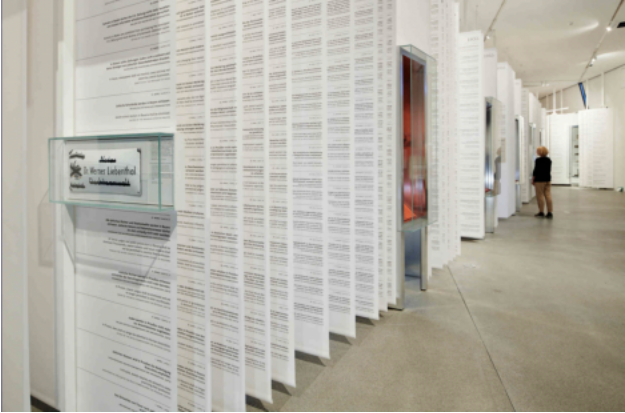
Since September 1, I’ve been studying in Berlin. I was always on the fence about studying abroad, but after more than three months, I can confidently say my decision was well worth it. I spent my entire high school career and a few semesters at Hamilton studying German language and culture, but never had the opportunity to experience the country. While many of my encounters here have reinforced things I learned in class, there were also a few unexpected lessons.

Enquiry is a publication that consistently embodies its motto “free thought and discourse.” But in recent years, many have thought it was focused more on discourse, contradicting other opinions, rather than free thought. To much of the campus, Enquiry represents a publication that is simply contrary to the views of most students. While we do offer differing opinions that cut against the grain of prevailing campus thought, we also wish to fully exemplify our motto by providing the seeds of conversation.

2020 has been an unusually eventful year. Wildfires in Australia, Kobe Bryant’s death in a helicopter accident, and the impeachment of President Trump dominated the headlines before even the first day of spring. Allegations of Hunter Biden benefiting from corruption in Ukraine and rumors of Kim Jong-un’s imperiled health have persisted for months. Black Lives Matter protests swept the nation, and chants of “ACAB” (“all cops are bastards”) engulfed popular culture following the murder or wrongful death of George Floyd, with some cities experiencing protracted protests and riots. Last weekend, Supreme Court justice Ruth Bader Ginsburg died after 27 years of highly visible service on the court, prompting a battle over the nomination of her successor that complicates an already most contentious election year. And of course, there is the ongoing COVID-19 pandemic, which in addition to claiming so many American lives affected Hamilton students by displacing us and nullifying a semester’s grades. The shift to a credit/no credit grading scale was especially disorienting to Hamilton students as no one - students or those reviewing a transcript - can discern what grades one deserved for that semester.

Editing a publication which cuts against the grain of public opinion on campus is challenging, enlightening, and incredibly rewarding. Our publication is either heavily scrutinized so it can be criticized or it is dismissed completely. It is sometimes picked up and discussed vigorously and sometimes thrown into the garbage soon after distribution. Sometimes we get strong agreement from our readers, and occasionally we engage in a friendly sparring session with our counterparts at The Monitor (though I believe we have a perfect record against them). Coming to the end of my tenure as editor-in-chief, I want to share some of my most rewarding experiences while publishing Enquiry.


In Japan, the term 者 の 哀れ (mono no aware) – which translates to “the pathos of things” – highlights the awareness of the impermanence of living things. Ironically, Japan has the highest life expectancy and the oldest average population in the world. Due to lower fertility rates and low immigration flows, Japan’s population has been shrinking at an alarming rate. In what the International Monetary Fund refers to as “shrinkanomics,” the nation’s demographic change is putting pressure on a vanishing labor force. As a result, Japanese youths are forced to adapt to a reality that is focused on supporting their elderly.